


Lab-Grown Diamonds:
Everything You Need to Know
Lab-grown diamonds have transformed the jewellery industry by offering a smarter, more modern way to purchase diamond jewellery. Once considered a niche alternative, they have quickly become one of the most popular choices for engagement rings, wedding bands, and fine diamond jewellery.
At Dream Diamonds, one of the most common questions we receive is:
"What is the difference between a lab-grown and natural diamond, and are lab-grown diamonds actually worth it?"
The answer surprises many people.
Lab-grown diamonds are real diamonds. They possess the same chemical composition, physical properties, brilliance, fire, and durability as natural diamonds. In fact, even experienced jewellers cannot distinguish a lab-grown diamond from a natural diamond with the naked eye. Both are graded and certified using the same internationally recognised standards.
The primary difference is their origin.
Natural diamonds are formed deep within the earth over billions of years through immense heat and pressure. Lab-grown diamonds are created in highly controlled environments using advanced technology that replicates this same natural diamond-growing process. The result is a genuine diamond that is visually, physically, and chemically identical to a mined diamond.
Are Lab-Grown Diamonds Real?
Yes.
This is perhaps the biggest misconception in the diamond industry. Lab-grown diamonds are not simulants such as cubic zirconia or moissanite. They are genuine diamonds with the exact same crystal structure as natural diamonds.
They are tested, graded, and certified in the same way as mined diamonds and exhibit the same sparkle, brilliance, and hardness that diamonds are famous for.
Even professional jewellers require specialised equipment to identify a diamond's origin. Without advanced testing equipment, there is no visible difference between the two.
What They’re Made of?
Both lab-grown and natural diamonds are composed of carbon atoms arranged in a crystal structure called a diamond cubic lattice. This structure is what gives diamonds there:
- Exceptional hardness (10 on the Mohs scale),
- Remarkable brilliance (high refractive index of 2.42),
- And legendary durability.
There is no difference in material composition — a lab diamond is not a "fake" version. It is simply grown in a different environment.
How Are Lab-Grown Diamonds Made?
There are two main methods used to create lab-grown diamonds:
1. HPHT (High Pressure, High Temperature)
- Mimics the natural conditions found 150–200 km beneath the Earth’s surface.
- A tiny diamond "seed" is placed in a chamber with carbon and subjected to temperatures of 1400–1600°C and pressures of around 5–6 GPa.
- The carbon melts and crystallises around the seed, forming a diamond over several weeks.
2. CVD (Chemical Vapour Deposition)
- A newer and more energy-efficient method.
- A diamond seed is placed in a vacuum chamber filled with carbon-rich gases (like methane).
- Using high temperatures (700–900°C), carbon atoms break down and begin to deposit onto the seed, forming a diamond layer by layer.
- CVD allows for more precise control over quality, making it ideal for high-grade jewellery.
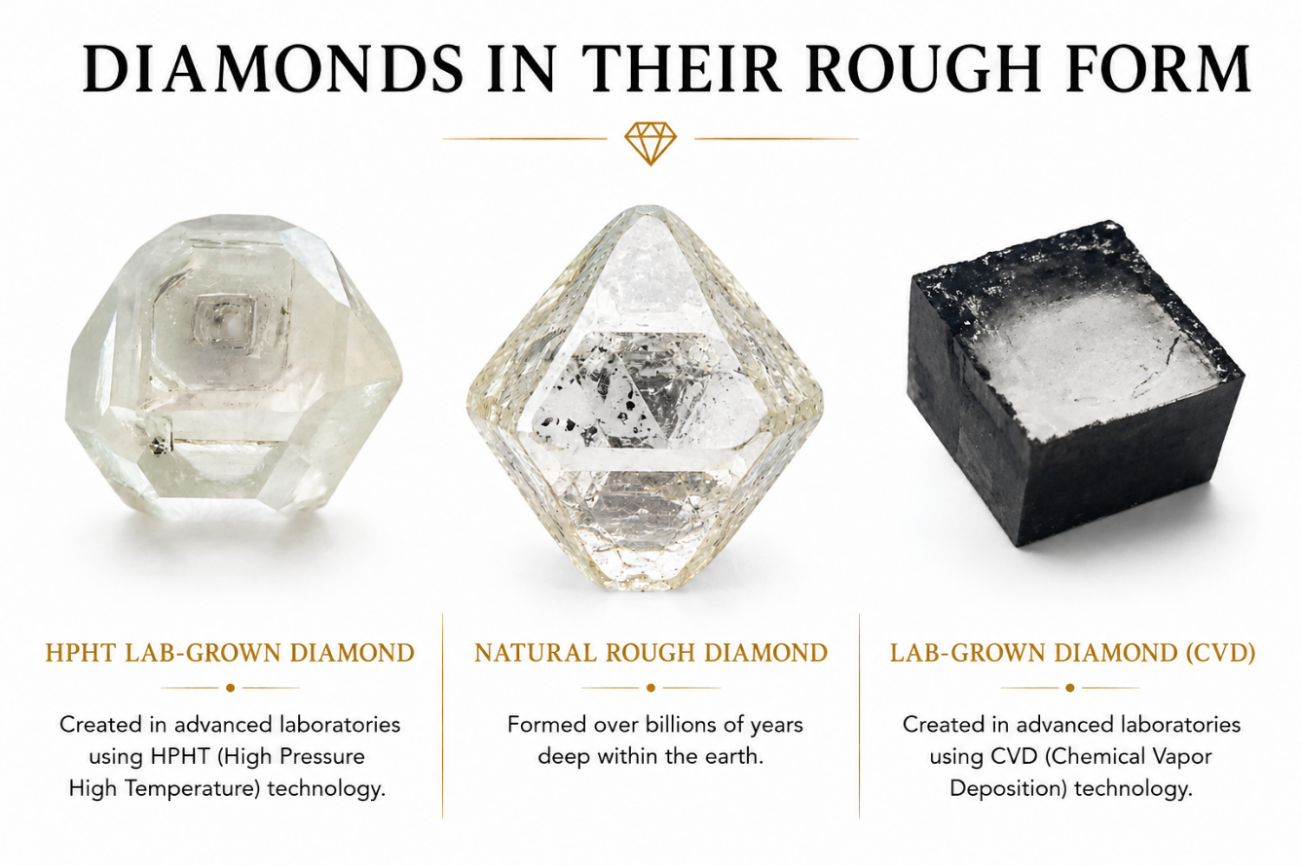
Can you tell the Difference?
No, to the naked eye, a lab-grown diamond and a natural diamond look identical. Both display the same brilliance, fire, scintillation and optical performance.
Do Lab-Grown Diamonds Last Forever?
Absolutely.
Diamonds are the hardest known natural material, ranking 10 on the Mohs Hardness Scale. Because lab-grown diamonds are real diamonds, they possess the same durability and resistance to scratching as natural diamonds.
With proper care, a lab-grown diamond can last for generations and be enjoyed just like any other fine diamond jewellery piece.
Why Are Lab-Grown Diamonds More Affordable?
The biggest advantage of lab-grown diamonds is value.
Because they are created using advanced technology rather than mined from the earth, the costs associated with extraction, transportation, and the traditional diamond supply chain are significantly reduced.
This allows buyers to choose:
- A larger diamond
- A higher colour grade
- A better clarity grade
- A more elaborate setting
while remaining within the same budget.
For many customers, this means achieving the engagement ring or jewellery design they have always wanted without compromising on quality or appearance.
Lab-Grown vs Natural Diamonds
| Feature | Lab-Grown Diamond | Natural Diamond |
|---|---|---|
| Composition | Pure carbon | Pure carbon |
| Hardness | 10 (Mohs scale) | 10 (Mohs scale) |
| Brilliance | Identical | Identical |
| Certification | IGI, GIA etc. | GIA, IGI, etc. |
| Environmental Impact | Lower (if grown sustainably) | Higher (due to mining) |
| Ethical Concerns | Minimal (conflict-free) | Can be associated with conflict |
| Price | ~70–80% less | Higher due to rarity and demand |
| Physical Properties | Identical | Identical |
| Appearance | Identical | Identical |
| Durability | Identical | Identical |
The choice ultimately comes down to personal preference rather than quality, as both options are genuine diamonds.
Are Lab-Grown Diamonds Worth It?
For many modern buyers, the answer is yes.
Lab-grown diamonds offer the same beauty, luxury appearance, and durability as natural diamonds while providing exceptional value. This allows customers to focus on the diamond itself rather than compromising due to budget constraints.
Many couples today are choosing lab-grown diamonds because they can purchase a larger centre stone, upgrade colour or clarity, or invest in a more intricate custom-designed ring without dramatically increasing their budget.
As awareness and education continue to grow, lab-grown diamonds have become one of the fastest-growing segments of the global jewellery industry.
How Are Lab-Grown Diamonds Certified?
Just like natural diamonds, lab-grown diamonds are independently graded by leading gemmological laboratories.
Certification evaluates the diamond's:
- Carat Weight
- Colour
- Clarity
- Cut Quality
- Measurements
- Proportions
At Dream Diamonds, we primarily offer diamonds certified by respected laboratories such as the International Gemmological Institute and GIA, providing confidence and transparency with every purchase.

Sustainability & Ethics
While lab-grown diamonds are not automatically sustainable, they eliminate many of the ethical and environmental concerns associated with traditional mining, such as:
- Land degradation
- Water pollution
- Human rights issues
Some labs even operate using 100% renewable energy, reducing their carbon footprint significantly.
Why Choose a Lab-Grown Diamond?
- Greater value – up to 50% more affordable for the same quality
- Ethical sourcing – free of conflict and mining-related issues
- Sustainable choice – especially when grown using green energy
- Visually indistinguishable – no one can tell the difference without advanced testing
Which Diamond Is Right for You?
There is no right or wrong choice.
Some buyers prefer the geological history and rarity associated with natural diamonds. Others prioritise value, size, and quality, making lab-grown diamonds the ideal option.
At Dream Diamonds, we offer both natural and lab-grown diamonds because we believe every client should have the freedom to choose the option that best suits their preferences, priorities, and budget.
Lab-grown diamonds represent a blend of modern technology and timeless beauty. They offer a responsible, affordable, and stunning alternative to mined diamonds without sacrificing quality, sparkle, or symbolism.
Whether for an engagement, anniversary, or self-love moment, lab-grown diamonds are a future-focused choice for conscious consumers.
The Dream Diamonds Difference
Our mission is simple: to help Australians make informed decisions and create exceptional jewellery without unnecessary markups or confusion.
Whether you choose a natural diamond or a lab-grown diamond, our focus remains the same: exceptional quality, expert guidance, outstanding craftsmanship, and genuine value.
Because luxury should be defined by the beauty of the diamond and the meaning behind it, not simply by the price tag.